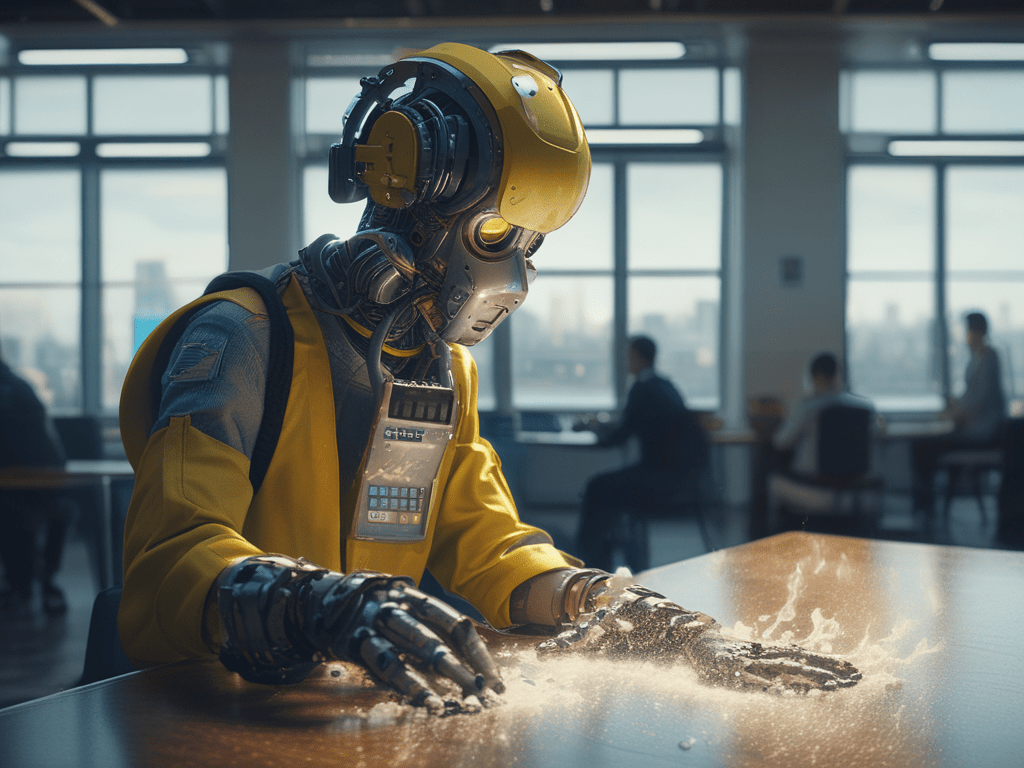
Automation and artificial intelligence (AI) are often perceived as threats to employment, but these technologies can actually create opportunities for better, more satisfying, and less alienating jobs. Here’s how:
1. Automation and AI Eliminate Repetitive Tasks
Tedious and Repetitive Tasks:
- Automation and AI can take over mundane tasks such as data entry, scheduling, and routine inspections. These tasks are often monotonous and do not require human creativity or problem-solving skills.
Focus on Higher-Level Tasks:
- By automating repetitive tasks, employees can focus on more strategic, creative, and high-value activities. This shift enhances job satisfaction as employees engage in more meaningful work.
2. Enhancement of Human Capabilities
Augmented Intelligence:
- AI can assist employees by providing insights, recommendations, and decision support. For instance, in healthcare, AI can help doctors diagnose diseases more accurately by analyzing vast amounts of medical data.
Skill Enhancement:
- Automation tools can enhance human capabilities, allowing employees to perform tasks that were previously too complex or time-consuming. This empowerment leads to more skilled and knowledgeable workers.
3. Creation of New Job Categories
Emergence of New Roles:
- As AI and automation take over certain tasks, new job categories emerge. Examples include AI trainers, data analysts, and automation specialists. These roles often require new skills and offer exciting career opportunities.
Interdisciplinary Fields:
- The integration of AI and automation into various sectors creates interdisciplinary roles that blend technology with domain-specific knowledge. For instance, AI in agriculture requires knowledge of both farming and machine learning.
4. Increased Productivity and Economic Growth
Economic Expansion:
- Increased productivity from automation and AI can lead to economic growth, which in turn can create new jobs. Businesses can reinvest profits into expanding their workforce and exploring new markets.
Enhanced Innovation:
- Freed from routine tasks, employees have more time to innovate and develop new products or services. This innovation drives business growth and the creation of new job opportunities.
5. Improved Work-Life Balance
Flexible Work Arrangements:
- Automation enables more flexible work arrangements by allowing remote monitoring and task execution. Employees can work from home or have more flexible schedules, leading to better work-life balance.
Reduced Workload:
- By automating strenuous or time-consuming tasks, employees can experience reduced workloads, which can decrease stress and improve overall job satisfaction.
6. Opportunities for Continuous Learning and Development
Upskilling and Reskilling:
- The adoption of AI and automation requires employees to learn new skills. Organizations often invest in training and development programs, providing employees with opportunities for continuous learning and career advancement.
Lifelong Learning Culture:
- The fast-paced nature of technological advancements fosters a culture of lifelong learning. Employees are encouraged to stay updated with the latest trends and technologies, leading to personal and professional growth.
7. Enhanced Safety and Job Satisfaction
Improved Workplace Safety:
- Automation can take over dangerous tasks, reducing the risk of workplace injuries. Robots and AI can handle hazardous materials, operate in extreme conditions, and perform heavy lifting, making workplaces safer for humans.
Higher Job Satisfaction:
- When employees are relieved from monotonous, dangerous, or physically demanding tasks, job satisfaction increases. They can focus on roles that are more engaging and aligned with their interests and skills.
Conclusion
Automation and AI do not inherently mean fewer jobs; rather, they transform the nature of work. By taking over repetitive, dangerous, and mundane tasks, these technologies free up human potential for more creative, strategic, and meaningful work. The result is a workforce that is more skilled, engaged, and satisfied, contributing to a dynamic and innovative economy. Embracing AI and automation, along with continuous learning and adaptability, is key to realizing these benefits and ensuring a positive future of work.

 EMZ: Data visualization, Data Artis
Leave a comment